
Choose acrylic when you want gallery-grade depth and the richest color for a single feature piece under controlled light. Choose metal when you want a lighter, tougher, more affordable print that shrugs off humidity and heavy traffic. Watch for glare on glossy acrylic near windows, and order a sample before committing to a large size, since mounting hardware and wall weight differ a lot between the two.
TL;DR:
- Acrylic prints offer deeper color saturation and a three-dimensional glow but are heavier, more prone to fingerprints, and lack durability against scratches and moisture.
- Metal prints provide greater resistance to humidity, scratches, and fading, making them ideal for high-traffic, humid, or frequently handled spaces.
- Face-mounted acrylic delivers unmatched visual depth, especially under controlled lighting, while metal provides a sharper, cleaner look with subtle metallic sheen.
- Larger acrylic pieces can be costly to ship and install, often requiring professional help, whereas metal is lighter and easier to handle, especially for bulk or multi-space projects.
- For shared spaces or properties, curated metal collections often prove more practical and cost-effective than individual acrylic or metal prints ordered separately.
Table of Contents
- Metal vs Acrylic Prints at a Glance
- What Are Acrylic Prints, Exactly?
- What Are Metal Prints, Exactly?
- How the Same Photo Looks Different on Each Material
- Durability: Scratches, Moisture, and Fading Over Time
- Weight, Sizing, and What Installation Actually Requires
- What Drives the Price, and When It's Worth Paying More
- How to Choose: A Quick Decision Checklist
- Choosing Materials for Lobbies, Offices, and Shared Spaces
- Three Quick Scenarios (And What I'd Actually Pick)
- When a Curated Collection Beats Ordering One Print at a Time
- Sources
- FAQ
Metal vs Acrylic Prints at a Glance
Here's the short version before you dig into the technical details.
Acrylic prints:
- Deliver glass-like depth and the most saturated color of any common print material, thanks to face-mounting behind clear acrylic.
- Show fingerprints and fine scratches more easily, and get heavy fast at large sizes.
- Best for: a single statement piece in a living room or gallery wall with controlled lighting.
Metal prints:
- Handle humidity, scratches, and daily handling better than acrylic, since dye-sublimation fuses ink directly into a coated aluminum panel.
- Give a cleaner, sharper look with a slight sheen, but less of that layered "glass" effect.
- Best for: bathrooms, kitchens, hallways, and any high-traffic or shared space.
Whichever you pick, request a sample swatch, check what's on the wall behind it (studs matter), and view the finish under your actual room lighting before you order full size.
What Are Acrylic Prints, Exactly?
Acrylic prints work one of two ways. The premium version is face-mounted: your photo gets printed on photographic paper, then bonded behind a sheet of optically clear acrylic so light passes through the acrylic and bounces back off the image, creating that glass-like glow. The cheaper alternative is direct-to-acrylic printing, where ink goes straight onto the acrylic surface. It costs less but looks flatter, since you lose the light-refraction effect that makes face-mounted acrylic distinctive.
Thickness typically runs from about 2mm to 6mm. Thicker acrylic looks more substantial on the wall and resists warping better, but it also adds weight and cost. You'll usually choose between a glossy finish, which maximizes shine and depth, and a museum-grade anti-glare finish, which trades a little brilliance for comfortable viewing near windows or overhead lights. Either way, face-mounted acrylic is what gives this material its reputation for the deepest visual "pop" of any wall art option.
What Are Metal Prints, Exactly?
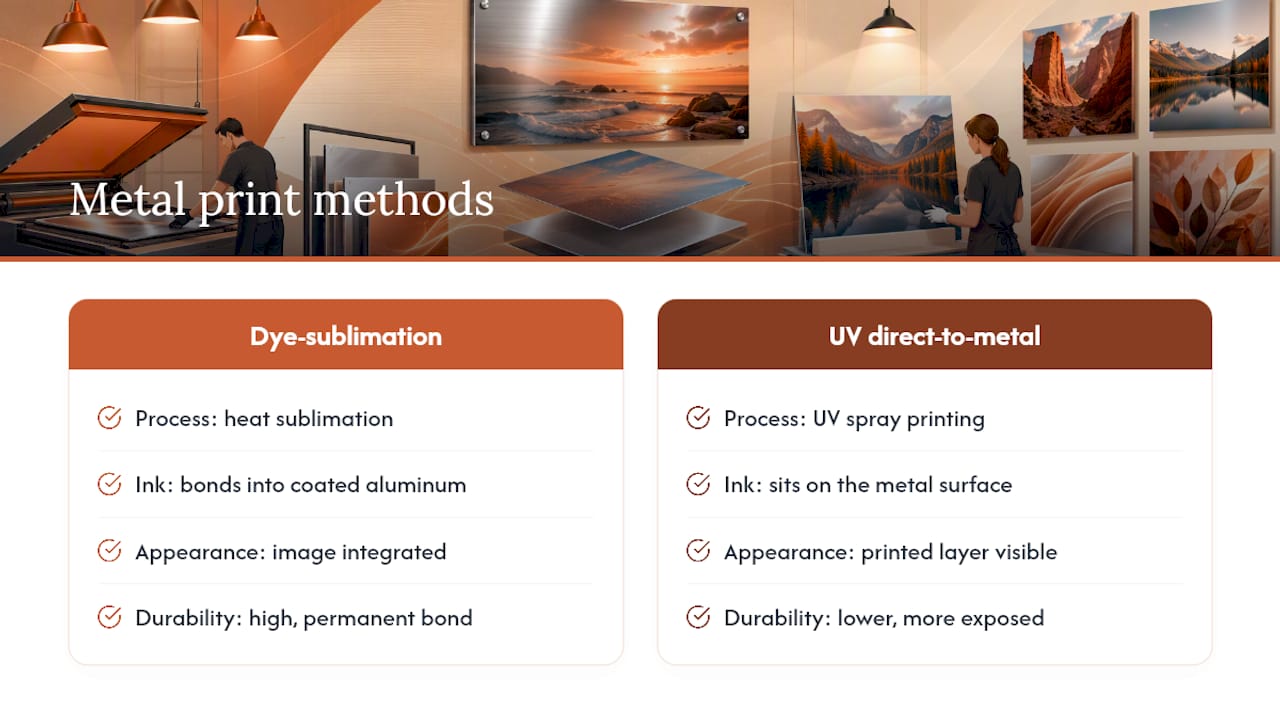
Most metal prints use dye-sublimation, a process where heat converts solid ink into gas that bonds permanently into a specially coated aluminum sheet. The result is a thin, rigid panel where the image is part of the metal itself, not a layer sitting on top of it. A separate process, UV direct-to-metal printing, sprays ink onto the surface instead of infusing it, and it tends to be less durable since the ink can sit more exposed to scratching.
You'll generally choose between two aluminum finishes. White-base metal gives you accurate, true-to-life whites and colors, which is what most people want for family photos, portraits, and standard photography. Brushed metal lets the aluminum's texture show through the image, adding a metallic sheen that works well for landscapes, black-and-white shots, and anything where a little industrial edge suits the subject. Panels typically run thin, often under half an inch including mounting hardware, and most come pre-fitted with a float-mount frame or standoffs on the back so installation doesn't require separate framing.
How the Same Photo Looks Different on Each Material
Print the same photo on both materials and you'll see two genuinely different objects, not just two frames around the same image.
Acrylic's face-mount construction refracts light through the clear top layer, which is why it produces deeper blacks, more saturated color, and a sense of three-dimensional depth that outperforms most other print materials for a single showcase image. Metal, by contrast, gives you a cleaner, sharper rendering with a subtle metallic sheen. It reads well from an angle in a hallway, where acrylic's glossy surface can throw distracting reflections.
Finish choice matters as much as the material itself. A few pairings to keep in mind:
- Bright room with lots of natural light: anti-glare acrylic or a satin metal finish, both of which cut reflections without killing contrast.
- Controlled gallery-style lighting: glossy face-mounted acrylic for maximum depth and color punch.
- Hallway or angled viewing: brushed or white-base metal, since it holds its look better off-axis.
The general rule providers recommend: stand in front of the actual wall at the time of day you'll view it most before locking in a glossy finish.
Durability: Scratches, Moisture, and Fading Over Time
Metal wins the durability contest in almost every practical sense. Dye-sublimation prints are highly resistant to scratches and moisture, and because the coating is baked into the aluminum rather than sitting on the surface, you can wipe them down with a damp cloth without worrying about damaging the image. Acrylic resists shattering (it won't crack like glass), but the surface itself is softer. Fingerprints show up fast, fine scratches accumulate over years of dusting, and standard acrylic offers no special protection against UV fading, though premium tiers sometimes add a UV-filtering coating.
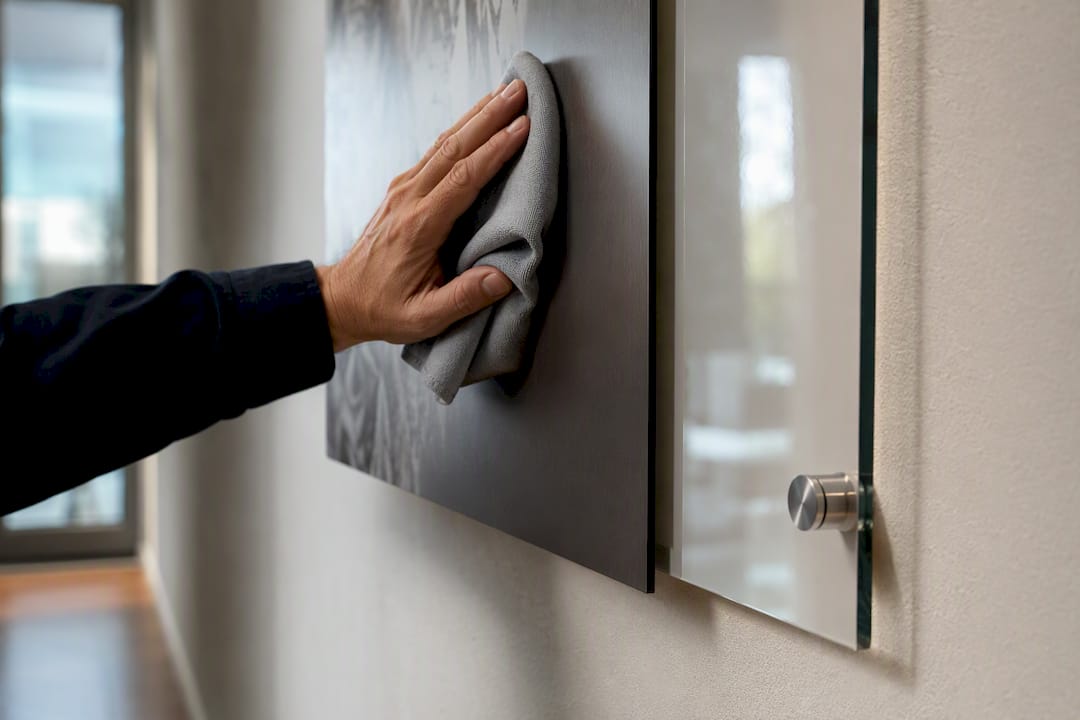
Humidity is where the gap widens most. Face-mounted acrylic relies on an adhesive bond between the print and the acrylic sheet, and prolonged high humidity can compromise that bond over time, leading to bubbling or separation at the edges. Metal has no such adhesive layer to fail, since the ink lives inside the aluminum's coating.
Practical guidance by room:
- Bathrooms and kitchens: metal, no contest. Steam and splashes are routine, and metal shrugs both off.
- Bright, sun-facing walls: metal or UV-coated acrylic. Standard acrylic without UV protection will fade faster over years of direct sun exposure.
- Low-traffic bedrooms and offices: either material works fine, so let the visual effect you want drive the decision instead.
- Rental units or spaces with frequent turnover: metal's lighter weight and scratch resistance make it easier to handle during moves and repositioning.
Weight, Sizing, and What Installation Actually Requires
Weight is the sleeper issue most first-time buyers underestimate. Acrylic can run roughly 8 to 14 kilograms per square meter compared to about 3.4 kilograms per square meter for metal, depending on thickness and mounting hardware. On a small 8x10 print, that difference barely registers. On a 40x60 statement piece, it's the difference between a two-person install and something you hang yourself in five minutes.
Before you order, work through this checklist:
- Measure the wall space and confirm it against the exact configured dimensions of your order, not just the image size.
- Locate studs if you're mounting anything over roughly 24 inches wide, especially for heavier acrylic.
- Confirm the configured weight with your provider once thickness and mounting hardware are finalized.
- Choose the right hardware: float mounts and French cleats work well for both materials, while standoffs give metal prints a slight offset from the wall that adds visual depth.
- Plan your delivery route for anything over 30 inches. Large acrylic panels are awkward and fragile through doorways and stairwells; professional installers are worth the cost for anything hallway-scale or larger.
What Drives the Price, and When It's Worth Paying More
Acrylic typically costs 30% to 100% more than metal for a comparable size, and that gap widens further with thicker acrylic, anti-glare or UV coatings, and larger formats that require specialized handling during face-mounting. Metal's price climbs more gradually, driven mainly by size and any specialty brushed or high-gloss finish.
The premium for acrylic is easiest to justify on a single, well-lit feature piece where depth and color are the whole point, a favorite portrait, a striking landscape, anything meant to be the visual anchor of a room. For everyday photos, hallway galleries, or spaces where several prints need to look consistent, metal usually delivers better value per print.
Whatever you choose, build installation and shipping into your budget upfront. Large acrylic pieces cost more to ship safely, and both materials benefit from professional mounting hardware that isn't always included in the sticker price. Order a sample panel first. It's a small cost against the risk of an expensive full-size print that doesn't match what you pictured.
How to Choose: A Quick Decision Checklist
Run through these questions before you place your order:
- What's the subject? Portraits and high-contrast images with deep shadows favor acrylic. Landscapes, black-and-white, and everyday photography do well on metal.
- How's the room lit? Bright, sunny rooms favor anti-glare finishes on either material. Controlled gallery lighting lets glossy acrylic shine.
- How humid is the space? Bathrooms and kitchens point strongly toward metal.
- How much traffic does the wall see? High-traffic hallways and shared spaces favor metal's scratch resistance.
- What's the budget? If cost matters more than the acrylic "glow," metal delivers comparable image quality for meaningfully less.
Pro Tip: Export your file at the resolution and color profile your lab actually requests (usually a minimum pixel density around 200 to 300 ppi at final print size, in Adobe RGB or a lab-specified profile) rather than assuming your camera's default settings will translate correctly. A mismatched color profile is the single most common reason a finished print looks duller than the file did on screen.
Before you finalize, ask your lab directly about finish options, exact configured weight, mounting hardware included, and lead time. And always order a physical sample. Providers consistently recommend viewing the actual material under your intended lighting before committing to a large, expensive print.
Choosing Materials for Lobbies, Offices, and Shared Spaces
Property managers face a different calculation than a homeowner picking one photo for a living room. Consistency, low maintenance, and predictable delivery matter more than any single "wow" piece. In lobbies, corridors, and amenity areas, metal's scratch resistance and humidity tolerance usually make it the safer default, especially anywhere cleaning crews wipe down walls regularly or foot traffic runs high. A curated, ready-to-hang collection with coordinated mounting also removes the guesswork of matching finishes across multiple pieces in one space.
Three Quick Scenarios (And What I'd Actually Pick)
For a gallery or feature wall in a well-lit living room, acrylic wins. That depth and color saturation is worth the extra cost for one showcase image.
For bathrooms, kitchens, or any space you plan to rotate or repaint often, metal is the practical call. It handles moisture and handling without complaint.
For corporate lobbies or multi-unit properties, I'd lean metal or a curated multi-piece collection, since low maintenance across dozens of prints matters more than any single piece's brilliance.
— Mat
When a Curated Collection Beats Ordering One Print at a Time
Ordering individual acrylic or metal prints works well for a single room. It gets complicated fast when you're outfitting a lobby, a dozen corridors, or several properties at once, where matching finishes, coordinating sizes, and managing separate installations eats up time you don't have.
Facilityart designs and delivers full art collections built specifically for shared spaces, so you're not piecing together individual prints yourself. Every collection is created for your property's architecture and finished ready to hang within two weeks, with material and mounting choices already matched to your space's light and traffic. If you manage more than one building, the multi-property program coordinates collections across your whole portfolio under one streamlined process. Ready to see what a curated collection looks like for your property? Start your collection and get a plan built around your walls, not a catalog.
Sources
- Acrylic vs Metal Prints: Which Wall Art Is Best for Your Photos in 2026? - Camera Times
- Metal, Epic, and Acrylic Prints - What are the Differences? - Bay Photo Blog
- Acrylic vs Metal Prints: Which Wall Art Is Best for Your Photos? - PhotoWorkout
- Acrylic vs Metal Prints: Which One Is Best for You? | Nations Photo Lab
FAQ
What Are the Disadvantages of Acrylic Prints?
Acrylic shows fingerprints and fine scratches more easily than metal, gets significantly heavier at large sizes, and standard versions lack UV protection against fading unless you pay for a coated upgrade.
Is Metal Artwork Out of Style?
No. Dye-sublimation metal prints remain a standard choice for photography and commercial spaces because of their durability and color accuracy, not a passing trend.
What Is the Best Type of Printing for Art Prints?
It depends on the image and setting: face-mounted acrylic suits a single showcase piece under controlled light, while dye-sublimation metal suits everyday photography, high-traffic areas, and multi-piece installations like those Facilityart designs for shared spaces.
Are Metal Prints Worth It?
Yes, especially for value and durability. They're typically lighter and less expensive than comparable acrylic, resist scratches and humidity well, and hold their color without the fading risk of uncoated acrylic.